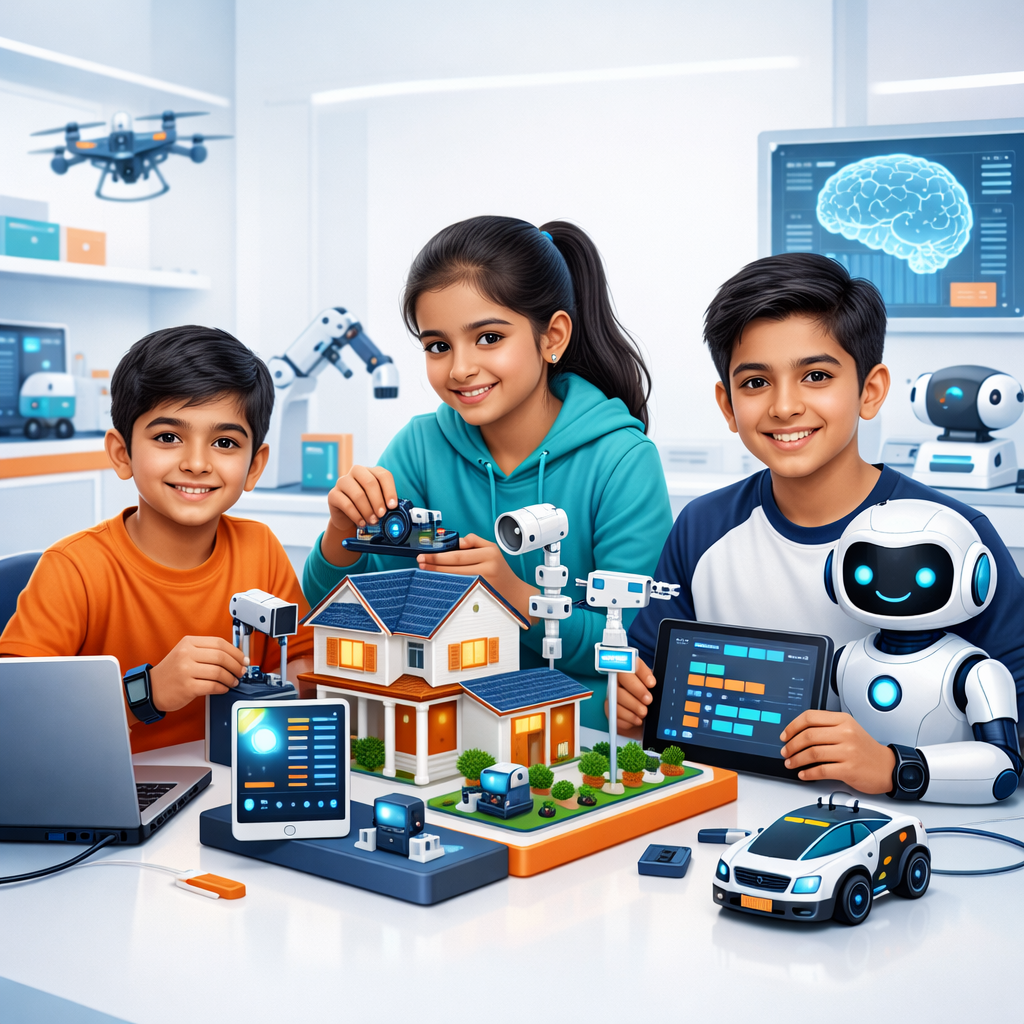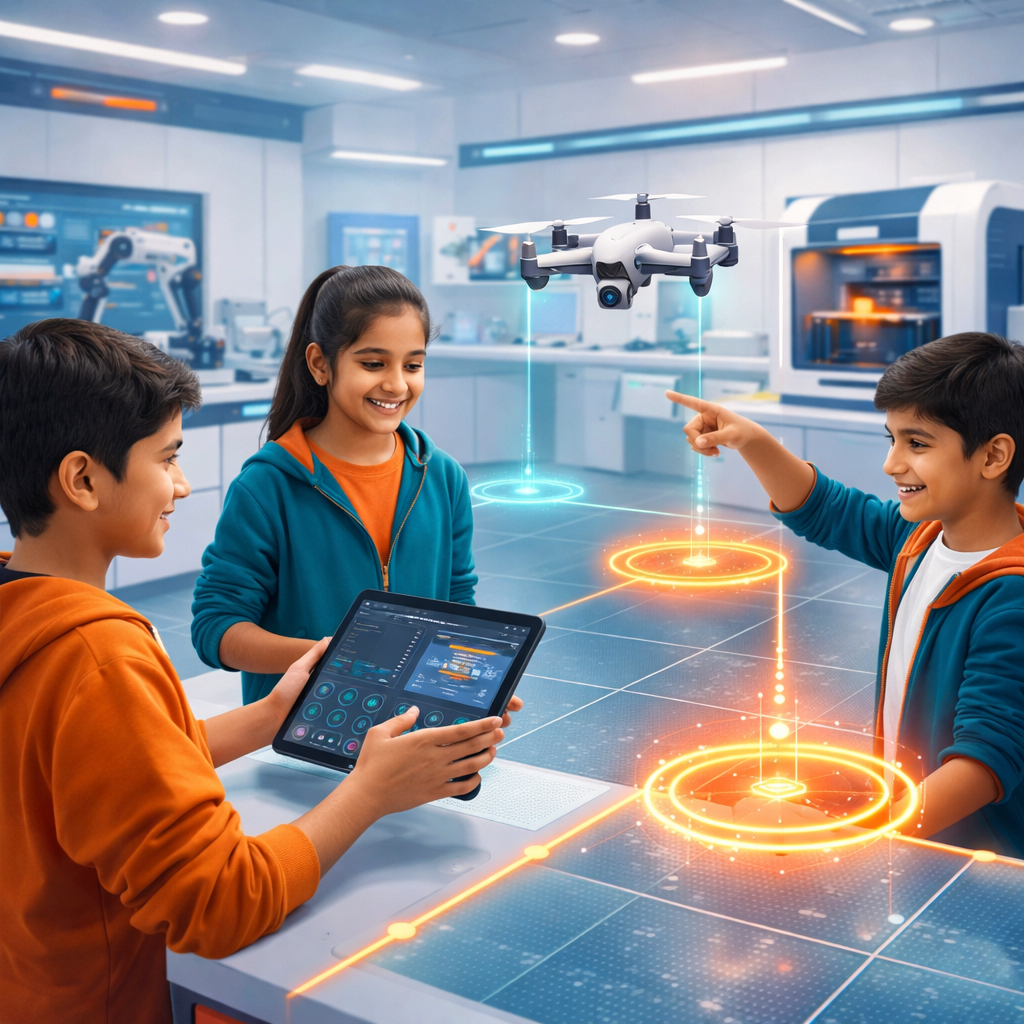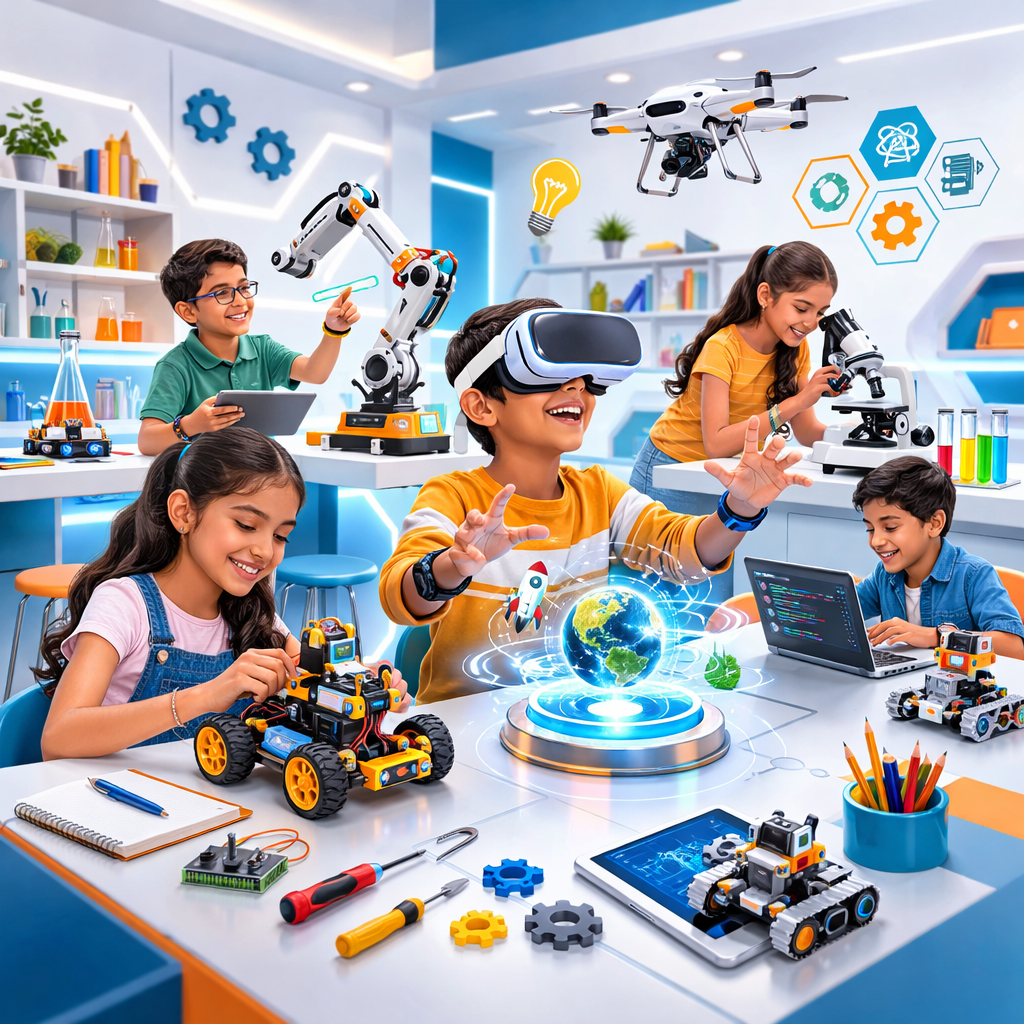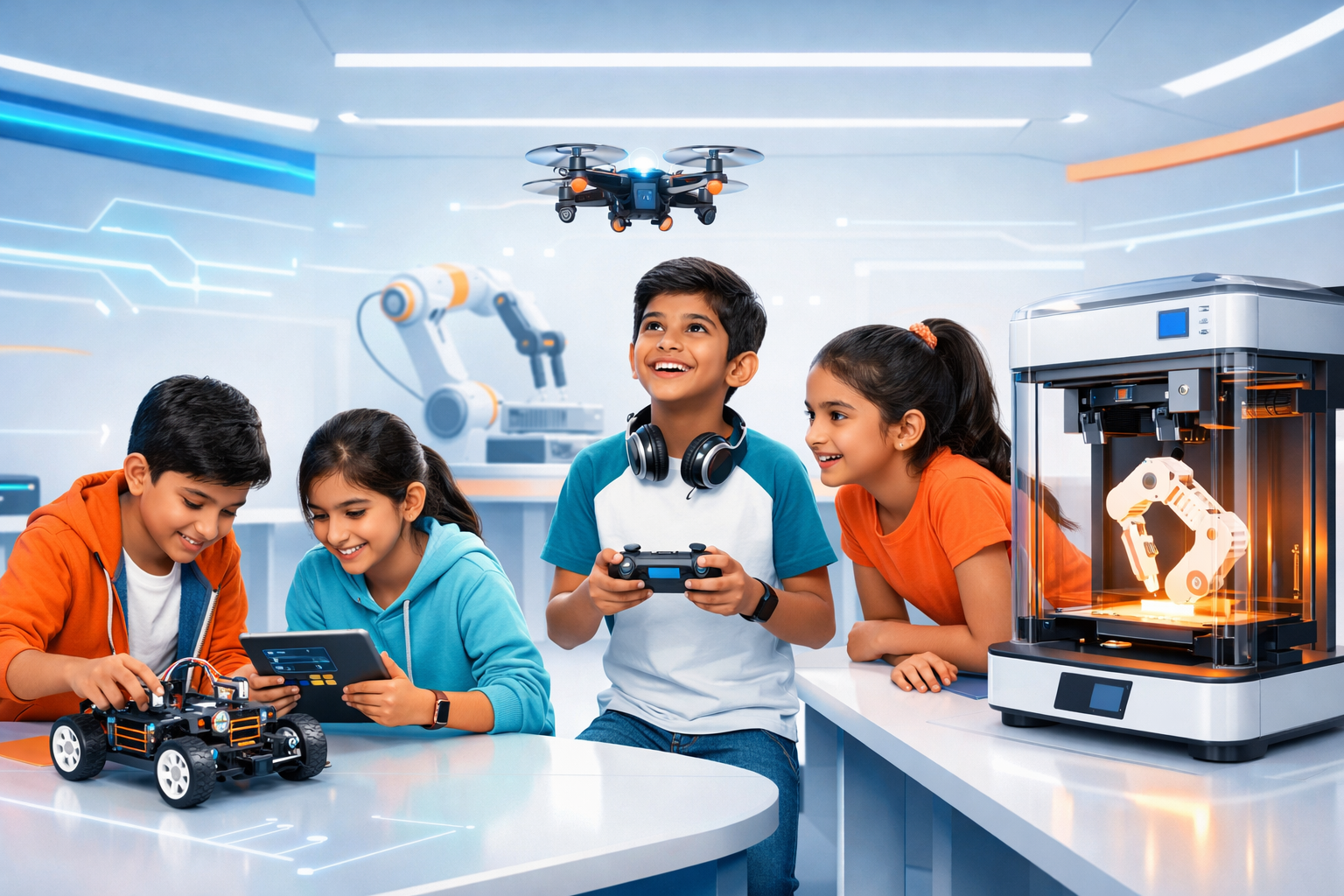
Clear structure, safe guidance, and real project-based learning
The studio is designed to feel exciting for kids and reassuring for parents, with age-wise progression and visible outcomes.
Ages 7-16 | Robotics | AI | Coding | 3D Printing | Drones
ForgeBot AI Lab is a beginner-friendly STEM studio where children learn by building real projects in a safe, structured, small-group environment.
View age-wise programs
The studio is designed to feel exciting for kids and reassuring for parents, with age-wise progression and visible outcomes.
ForgeBot AI Lab helps children build, test, think, and create through guided hands-on sessions that feel structured, safe, and worth their time.
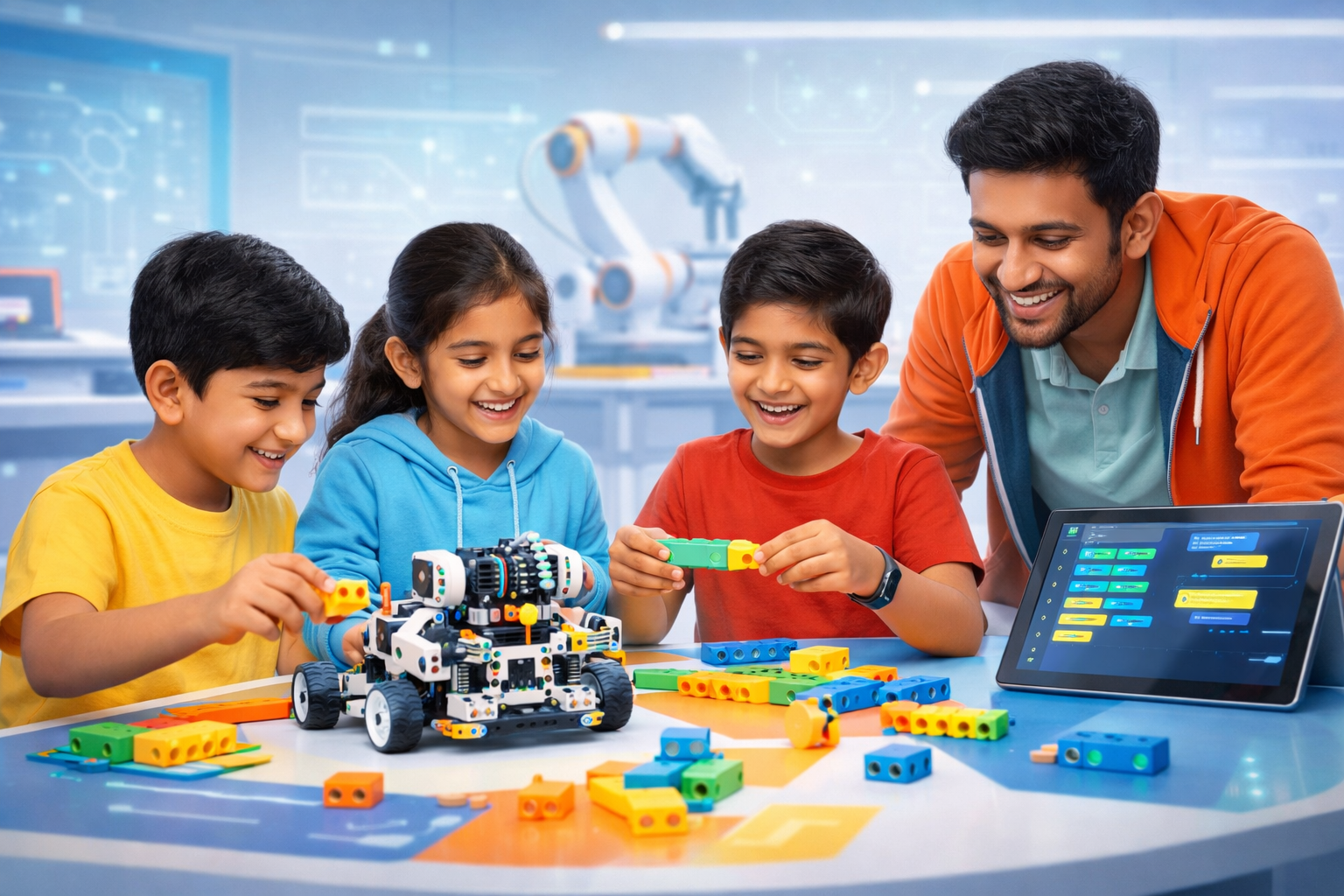
Children spend more time building, testing, and creating instead of only watching or tapping through lessons.
Each session is structured so kids can explore safely while still receiving step-by-step mentor support.
When children build a robot, complete a coding task, or hold a printed part, learning becomes visible and memorable.
Activities are planned by age and comfort level so beginners can join without feeling overwhelmed.
We are opening ForgeBot AI Lab with a pilot batch so early families can experience small-group, mentor-led sessions from day one.
This is an intentional start. Smaller groups help us keep the environment hands-on, beginner-friendly, and personal.
Pilot batch students get closer observation, simpler onboarding, and more time to ask questions.
The studio is designed for hands-on building tables and guided learning, not crowded theory sessions.
Early families get to experience the lab while routines stay personal, structured, and mentor-led.
The demo is designed to help your child feel comfortable and help you understand how the studio works before you commit.
We understand your child's age, comfort level, and interest in robotics, coding, AI, 3D printing, or drones.
Your child tries a beginner-friendly build or challenge that feels exciting without needing prior experience.
Depending on age, they may explore robot parts, simple coding logic, a 3D print workflow, or a guided drone activity.
You get clarity on how classes work, how batches are grouped, and which starting track suits your child best.
Each program is designed to be easy to start, exciting to continue, and practical enough for children to show visible learning over time.

A playful first step into building, motion, and creative STEM.
Explorers begin with simple robotics, beginner coding play, and maker projects that turn curiosity into confidence.
Best for curious children who enjoy hands-on play, stories, drawing, and making things move.
Includes materials & take-home projects

From curiosity to mechanisms, logic, and challenge solving.
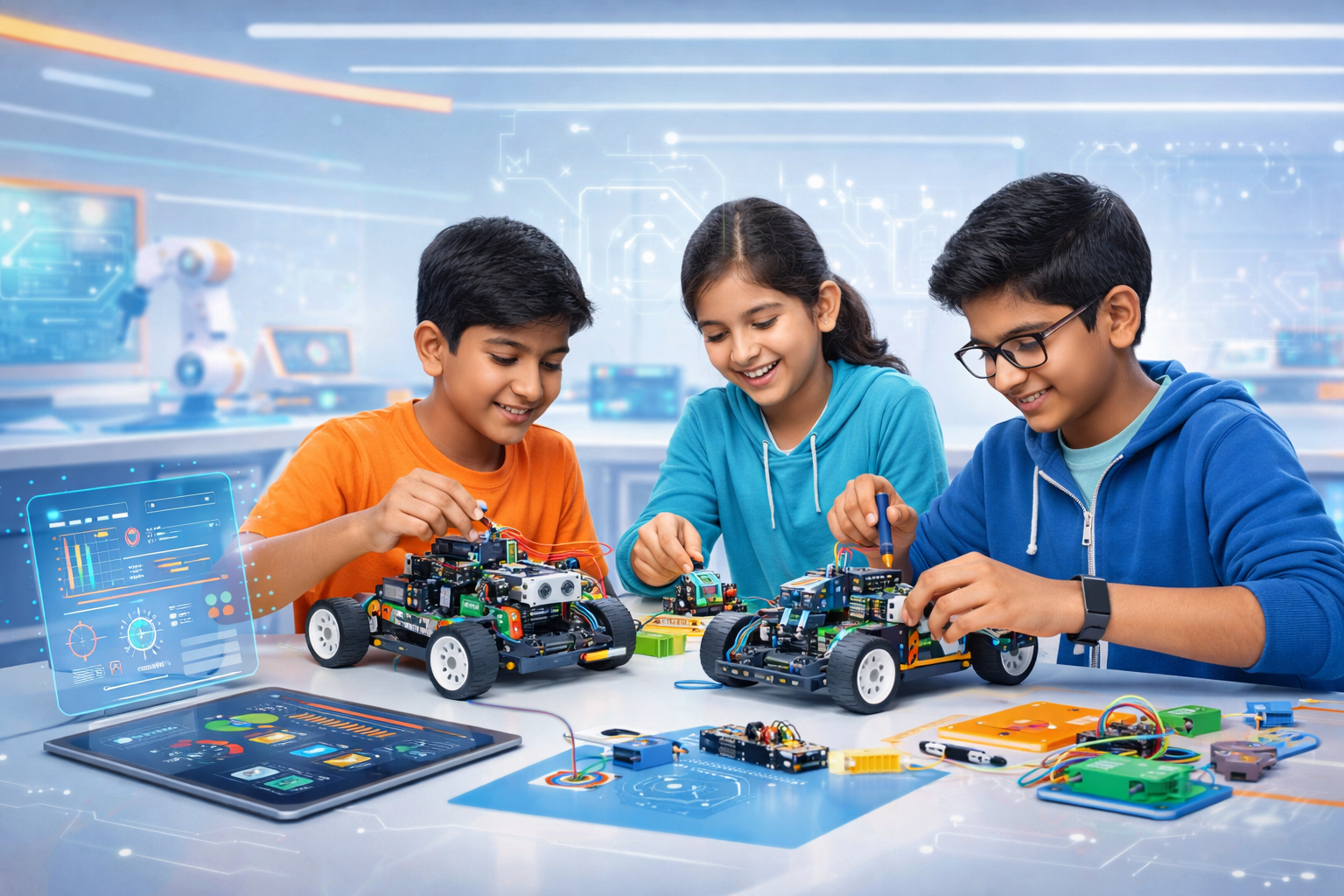
Builders work with robot cars, sensors, circuits, beginner coding, and structured engineering missions that feel practical and rewarding.
Best for kids who like figuring out how things work and want more action than theory-heavy classes.
Includes materials & take-home projects

A stronger studio track for teens ready to prototype and think like creators.
Innovators explore AI ideas, automation, IoT concepts, prototyping, and more advanced build-and-test thinking in a guided environment.
Best for teens who want hands-on future-tech exposure with structure, creativity, and practical problem solving.
Includes materials & take-home projects
ForgeBot focuses on practical outputs: projects, parts, models, challenge work, and take-home creations that make learning feel real.

Children learn how parts, wheels, motion, and simple logic come together in a project they can see and test.

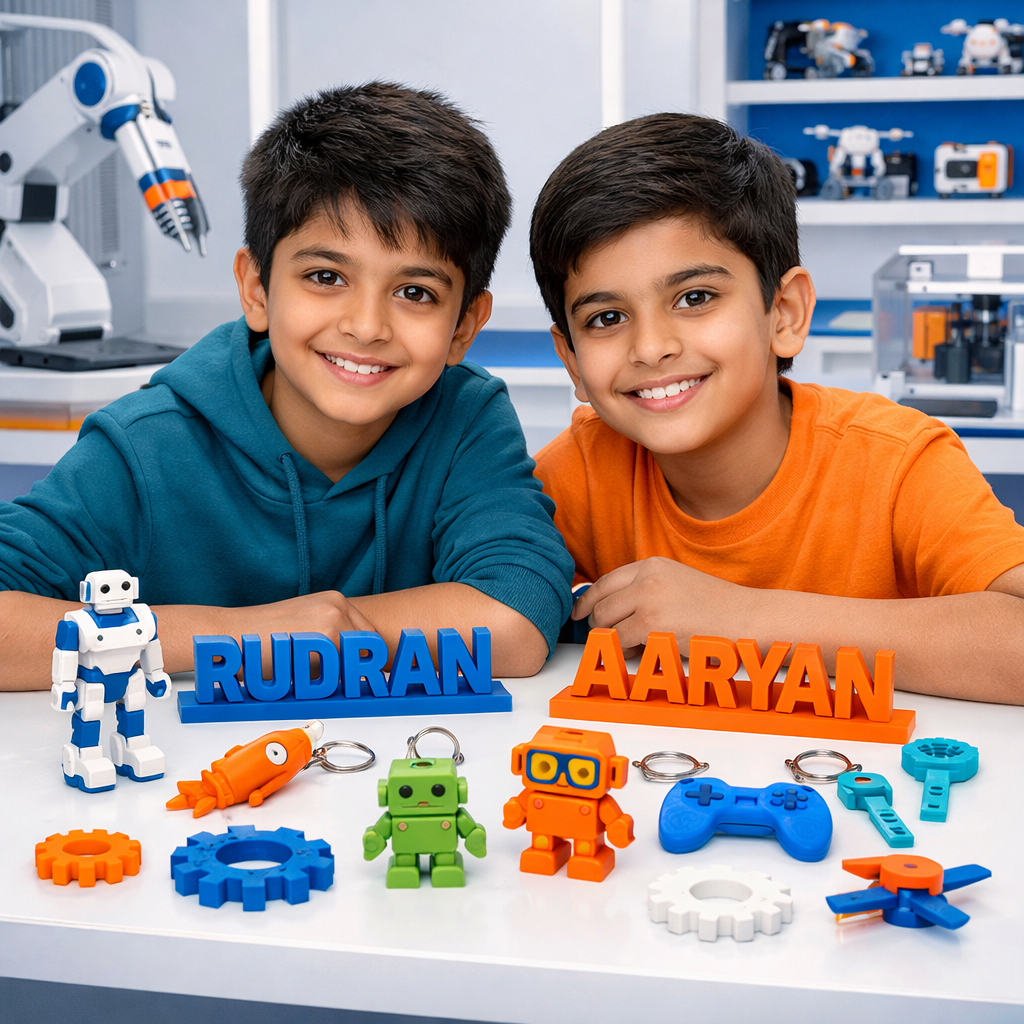
Design becomes physical as children create printed pieces, tags, and simple parts connected to their projects.

Students connect logic, sequencing, prompts, and automation ideas to something they can actually test.

Guided indoor drone tasks help children practice coordination, instruction-following, and mission thinking in a controlled way.

Selected activities help older learners connect digital concepts with real-world science, design, and innovation thinking.
ForgeBot AI Lab is built as a hands-on local studio, not a mass coaching setup. We balance fun, structure, safety, and visible progress so the learning experience feels credible from the start.
We use hands-on activity to make concepts easier to understand, especially for beginners.
The level of challenge changes with age so children stay engaged without feeling left behind.
Sessions are playful and energetic, but still guided, practical, and respectful of safety.
The goal is for parents to notice what a child built, learned, and talked about after class.
Straight answers that help reduce hesitation and make the next step easier.
Yes. The programs are designed so first-time learners can join comfortably. We guide children step by step and group activities by age and starting level.
Yes. No prior coding experience is required for the demo or beginner tracks. We introduce logic and building in a simple, hands-on way.
Drone activities are guided and age-appropriate. The focus is on controlled mission-based exploration, not unsupervised flying.
We group learners by age band and comfort level so activities feel relevant, manageable, and engaging for that stage.
No. Screens are used only where they genuinely help with coding, design, or guided activities. The bigger focus is on building, testing, and creating.
Your child tries a beginner-friendly activity, explores the studio style, and you get clarity on age fit, class structure, and the right next step.
It is strongly hands-on. Children interact with parts, tools, models, coding tasks, print workflows, and guided challenges rather than only listening to explanations.
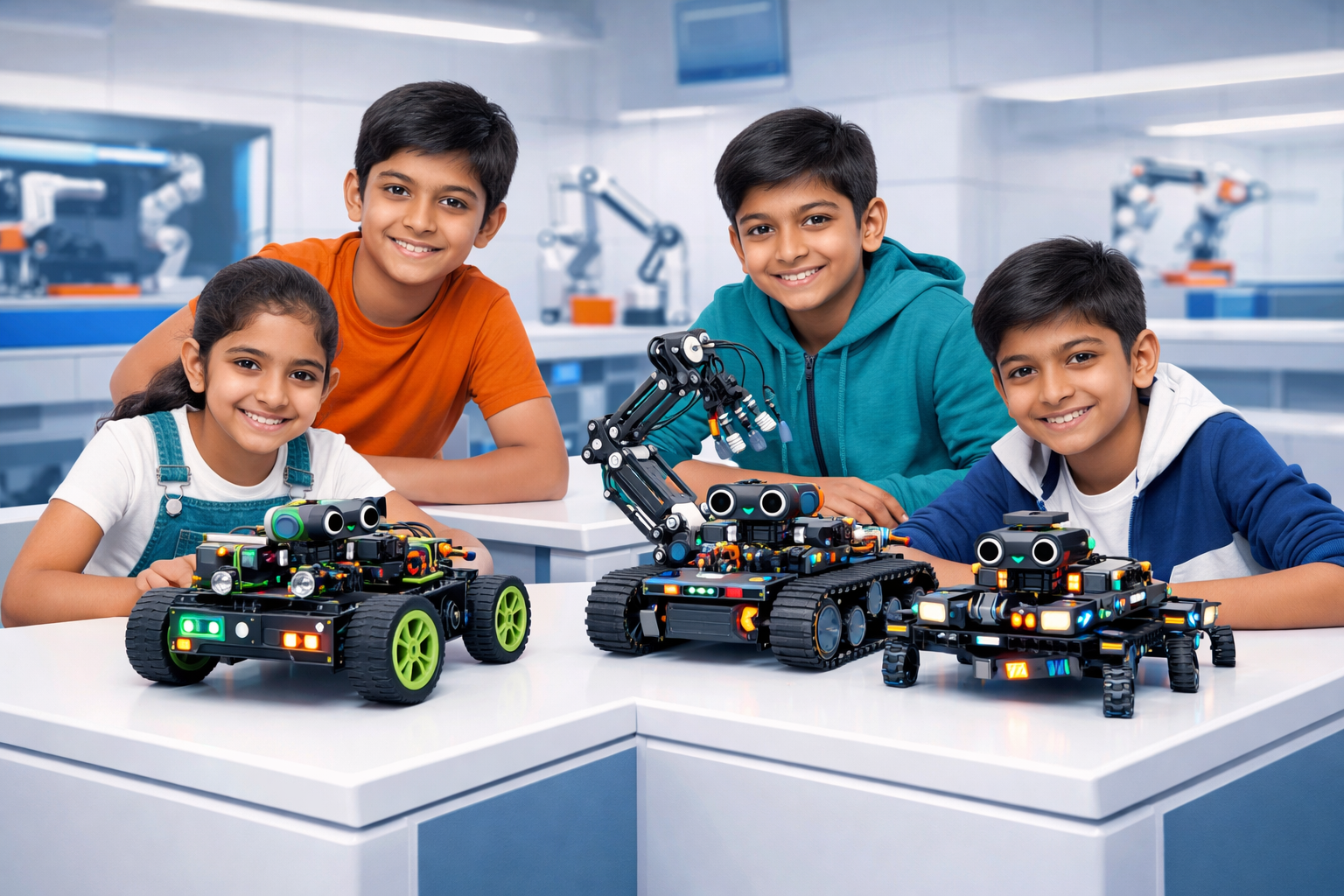
Depending on age, children may work on robot cars, moving models, beginner coding projects, 3D printed pieces, drone challenges, and simple AI-related activities.
Visit the lab, understand the teaching approach, and see how ForgeBot can fit your child's age, curiosity, and confidence level.
Small-group seats are intentionally kept limited so sessions stay guided and hands-on.
Book a demo, call us directly, or visit the lab and see the environment for yourself.